Latest
From Eric

I’m about nine months into my new job as the Vice President for Employee Benefits, and it has been a humbling experience.
The work requires consistent outbound effort: phone calls, follow-ups, emails, LinkedIn messages, and patience. And if you’ve ever done business development, you already know the part no one glamorizes:
A lot of effort…
A lot of attempts…
And a lot of silence.
Many calls go unanswered. Many emails go unreturned. It’s not personal, but it feels personal if you let it.
At the same time, I’m also a professional speaker. In that world, the feedback loop is immediate. I’m on center stage speaking to hundreds of people. Afterwards, people shake my hand, tell me what the message meant, and sometimes I’m signing books.
That contrast has taught me a lesson I needed to relearn:
Failure is not identity. Failure is information.
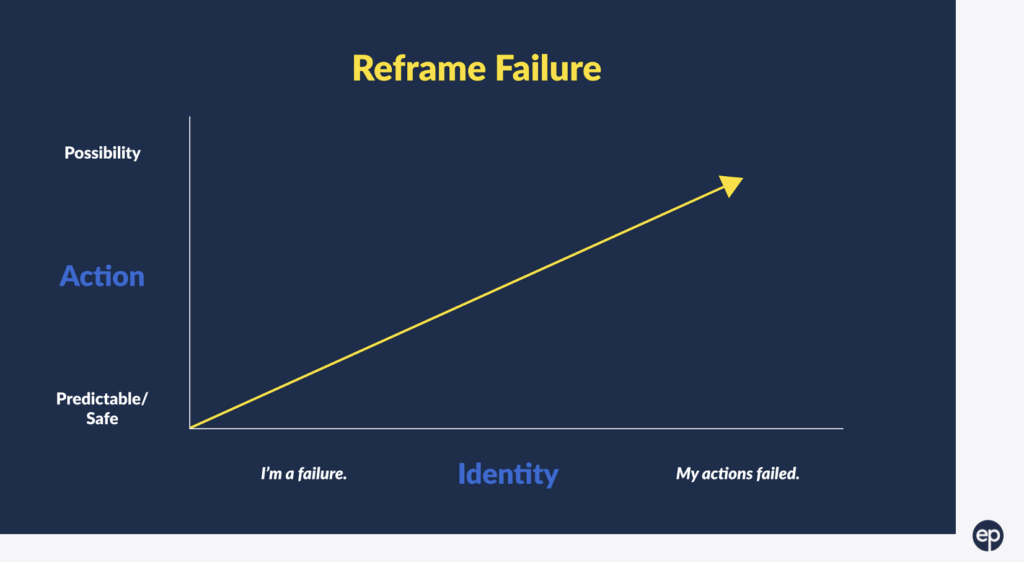
When outreach doesn’t land, when momentum slows, or when results don’t show up quickly, most of us default to one of two internal stories:
This story doesn’t lead to improvement; it leads to shame. And shame doesn’t produce better performance. It produces hesitation, overthinking, and avoidance.
This story creates space to learn. It turns disappointment into data.
And data leads to decisions.
When you tie failure to identity, you end up stuck:
But when you tie failure to actions, everything changes:
That’s the shift I’ve been practicing:
My outcome isn’t who I am. My outcome is feedback on what I did.
In this season, I’ve had to take inventory constantly, not with emotion, but with honesty:
Sometimes the answer isn’t “work harder.”
Sometimes the answer is work differently:
The win isn’t that every call gets answered.
The win is staying in motion without letting rejection rename you.
Because rejection can be loud if you let it talk.
But here’s the truth:
You’re not failing as a person. You’re refining as a professional.
And that’s a completely different story.
If you’ve been discouraged lately in sales, leadership, parenting, health, or anything else, ask yourself:
Is it really who I am… or is it what I’m doing?
If it’s what you’re doing, that’s good news.
Actions can be changed.
Strategies can be improved.
Systems can be built.
Skills can be learned.
And progress can be made.
Reframing failure means changing the meaning you attach to a setback. Instead of treating it as a verdict on your identity (“I’m a failure”), you treat it as feedback on your approach (“my actions didn’t work”).
Identity-based failure leads to shame and avoidance. It makes you less likely to take the next rep — which is the only thing that creates growth.
Use a process mindset: separate who you are from what you did. Review your actions, identify what to adjust, and commit to the next set of reps.
Take weekly inventory: identify one action to start, one to stop, and one to improve. Then measure your effort, not just your outcomes.
by Eric Papp
Phone: 813-846-0345
Email: Eric@EricPapp.com
Contact Eric